







Behind closed studio doors in Berea, Kentucky, artists are rediscovering what it means to craft for themselves, not for the sale or show, but for the joy of creation.
As the town’s identity as an arts hub shifts, local artisans are scaling back on public demos and high-volume production. What was once a constant rhythm of workshops, open studios and bustling craft festivals has slowed, leaving many artists to focus inward, reconnecting with their craft in quieter, more personal ways.
Berea’s identity as an arts town hasn’t disappeared, but it has changed. Walk through Old Town or College Square today, and you’ll still find the work of local artisans: hand-forged jewelry, weavings, broomcraft, ceramics. But what’s no longer guaranteed is a studio door propped open with a half-finished mug on the wheel or a woodworker mid-demonstration, sawdust on their apron.
“If you’re looking for artists in every single building that are going to be there demoing, we’re not there anymore,” Dani Gift, interim director of tourism for Berea, said. “That’s just not what art in Berea looks like anymore.”
A tradition shaped by time
Berea’s craft heritage is rooted deeply in generations of Appalachian tradition. The town’s pottery, weaving and woodworking history provides a firm foundation, but many artists today are caught between two worlds — making art for self-enrichment or creating for others.
For decades, Berea has been known as a haven for craftspeople, particularly through the Student Craft program at Berea College, where students learn traditional methods alongside the business skills needed to sell their work. The fusion of art and commerce, however, has bred a quiet tension.
Some artists feel the pressure to produce something marketable has stripped their craft of its original joy. Others see the evolution as necessary to survival in a changing world.
The COVID-19 pandemic accelerated shifts that were already happening: rising overhead costs, an aging artist population, and a broader redefinition of what it means to be a working craftsperson.
“The economy certainly doesn’t help. Overhead costs for artists and crafters are getting higher every day,” Gift said. “But they’re still pushing, and if they’re gonna keep pushing for it, then we’re gonna keep pushing for them.”
The tug between creation and commerce
For Amanda Lee Lazorchack, craft was never just about making objects. It was about making meaning.
At Berea College, Lazorchack, director of broomcraft at Student Craft, helps students navigate the complicated balance between tradition and market demands.
Broom-making, once a purely functional art, has evolved into a craft that must often impress visitors with a “wow” factor. Lazorchack said students struggle with combining their creative vision with the need to produce work that can sell.
A lifelong tinkerer and builder, she said she was always drawn to working with her hands. Farming, herbalism, woodworking, printmaking, photography, textiles — whatever sparked her curiosity at the time, she pursued it. But broom-making, she said, felt different.
“When I found broom-making, it just made sense,” Lazorchack said. “It felt good. I loved doing it. I think I was good at it from the get-go. And so I gave it a try.”
Growing up surrounded by handwork — a father who could build anything, a mother who taught her to see the world with wide eyes, a grandmother who quilted — she knew how deeply craft could root itself into everyday life.
Still, the life of an independent craftsperson could be isolating. Most of her days were spent alone in her studio, working quietly, while connections with the broader world happened mostly online. The lack of face-to-face interaction left her feeling detached, even as she built a successful practice.
“I looked at my practice and I wondered, okay, how can we change this? How can I interact more with the world around me?” she said.
Teaching, she realized, was the answer.
“My role here as an educator is less about turning my students into full-time artists or full-time craftspeople,” she said. “I use craft as a container for education. Yes, I’m teaching them how to make a broom and what high craft is, but I’m also using craft to teach communication skills, how to fail gracefully, how to work as a team.”
Many students don’t plan to become full-time artists at all. They are history majors, communications majors, future engineers. Yet, in the studio, they are challenged to make considered decisions with their hands — to understand patience, persistence and resilience.
Instructing students at Berea College allowed Lazorchack to stay connected to her craft while also creating opportunities for human connection. It shifted her relationship with her business. No longer was she constantly producing for an unseen, online audience. She could stay present in each moment, grounded in the act of making and teaching.
“My relationship with my business has changed quite a bit and in some ways is very relieving,” Lazorchack said. “It allows me to really be in one moment at a time, as opposed to constantly making and building content to share with the wider world.”
Through craft, she teaches not just technical skills, but life lessons: how to fail gracefully, how to collaborate, how to persevere.
In a world that often romanticizes creative careers, Lazorchack said she is honest with her students about the realities they will face after graduation.
She tries to prepare students for the world outside Berea without sugarcoating the challenges.
“The cost of living is quite expensive,” she said. “I constantly encourage them to be flexible, to adjust expectations when necessary, but not to lower their standards. You deserve to have a safe, beautiful place to live and a table full of food. Those are totally reasonable expectations.”
There is no arrival point in a creative life, she tells them — no moment when everything is complete.
“It’s just this constant movement of, what are my goals and how do I feel and what’s available around me and where would I like to see myself go, and to just keep waking up every day and doing the best you can,” Lazorchack said.
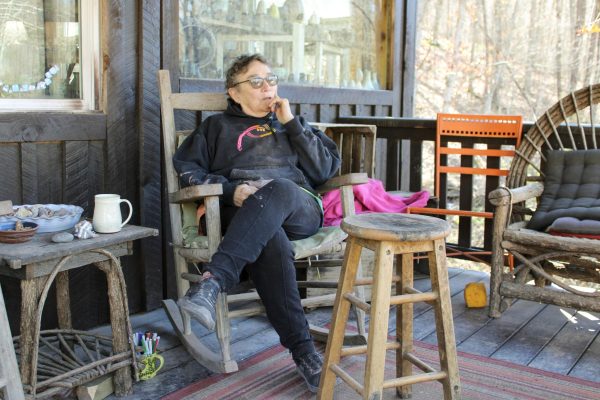
The physical and emotional toll of production
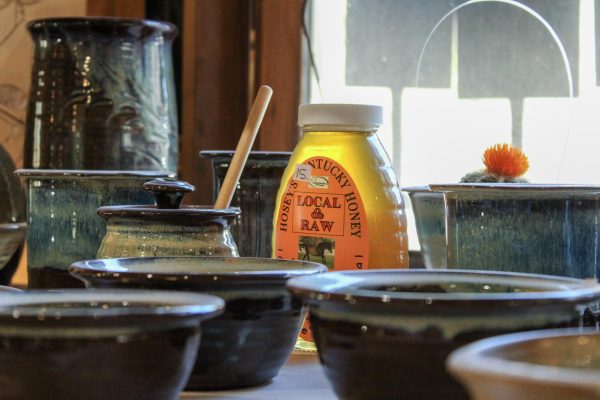
At Tater Knob Pottery & Farm, Sarah Culbreth has lived through nearly every phase of Berea’s shifting craft scene.
From the time she opened her studio to the public in 1980, Culbreth loved the connection between artist and visitor. For decades, she demonstrated pottery-making daily, balancing the demands of creation with the expectations of a growing audience.
Sarah Culbreth’s journey into pottery was never about fame or recognition. It was about the work — the physical, hands-on connection with the clay, the simple satisfaction of shaping something useful and beautiful. As a young potter, she was shy and often unsure of her place in the wider art world.
“I had a major inferiority complex,” Culbreth said. “I was very shy, naive, very backward.”
Early on, she resisted spaces that demanded validation. The process of jurying — where artists are evaluated and accepted or rejected from shows and galleries — felt deeply personal.
“It’s just the person’s personal opinion,” she said. “But they can make or break your life by letting you in a gallery or excluding you from an event. I never really put myself out there to be judged as much as possible because it’s heartbreaking. It’s hard. I don’t want to do that to my heart.”
Instead, Culbreth built her career from the ground up, letting her work and her relationships with customers speak for themselves. She opened Tater Knob Pottery to the public from the very beginning, inviting people to watch her throw clay, ask questions, and buy directly from her wheel. Over time, her studio became not just a place of work, but a place of connection.
“The people have responded by making their presence exchange for the hard-earned money they make,” she said. “I’ve been very grateful. I’m still very grateful.”
Even as the years went on and her reputation grew, Culbreth stayed grounded in small gestures. She gifted clients extra pieces. She spent time listening to their stories. She built a life centered not on the validation of juries or critics, but on the quiet, steady affirmation of community.
Now, after decades of production and public life, she is savoring a different kind of success — one rooted in peace, gratitude and the gentle rhythms of a slower day.
Years of hauling heavy crates to shows, setting up booths in unpredictable weather, and producing high volumes of work took their toll.
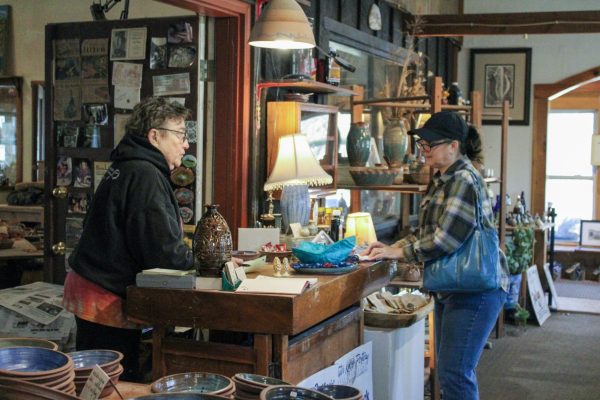
“Your body will tell you as you age — to lift and haul heavy crates of pottery, boxes of pottery, and set them up in an environment that you don’t know if the wind is going to come or a big storm is going to come,” Culbreth said.
COVID-19, she said, became a natural stopping point. After 40 years of events and commissions, she stepped back.
“I no longer accept custom commissions,” she said. “For more than 40 years, I let my public tell me what to do because it was a solidity of finance.”
Now, her days look different. She spends time in her studio when she wants, makes small projects that bring her joy, tends to her flowers and gardens, and allows herself the luxury of a nap when needed.
“I cherish the relationships,” Culbreth said. “I spend time looking in their eyes and listening to their stuff, because that’s a give and take that makes your presence in your energy fields — for me, it’s a real positive.”
Despite the challenges, she said she remains deeply grateful for those who have supported her work over the years.
“I gift my clients. I gift new clients. I give more than I have to because that’s what makes a difference in life,” she said.
Dani Gift: Shaping a Future for Berea
In the offices of Berea’s Department of Tourism, Dani Gift is working to ensure that art remains at the heart of the town’s identity, even as the landscape shifts.
Gift, who leads tourism initiatives for the city, said that the image of Berea as a place where every storefront housed a working artist is no longer accurate. Economic pressures, changing demographics and the long shadow of COVID-19 have changed the face of Berea’s art scene.
“It’s a completely different playing field, especially after COVID,” Gift said. “The economy certainly doesn’t help. Overhead costs for artists and crafters are getting higher every day.”
Yet despite these challenges, Gift said there is a sense of perseverance among the artists — and a deep desire from the city to support them.
“If they’re gonna keep pushing for it, then we’re gonna keep pushing for them,” she said.
Rather than expecting artists to maintain open studios every day, Berea has shifted its approach. One of the most sustainable initiatives has been Learnshops — a series of hands-on classes taught by local artists where visitors and locals alike can engage directly with the creative process.
“Learnshops provide the most consistency because people really crave that hands-on experience,” Gift said. “It’s a model that creates more of an even playing field for everybody.”
Large events like the Berea Craft Festival, which brings in thousands of visitors each year, still play a crucial role. But the deeper focus, Gift said, is on nurturing meaningful encounters between artists and the people who come to Berea seeking something real, not just a product, but a piece of a story.
“I really think that we are heading on a good track to not just keep arts and crafts alive in Berea, but to really prosper with it,” she said.
That prosperity may not look like it once did. The open studios, the impromptu demonstrations, the casual exchanges between artist and visitor — those things are rarer now. But what remains is the heartbeat of a community that has always known how to adapt, how to survive, how to create beauty even when conditions aren’t perfect.
Across Berea, artists continue to navigate the tension between art for self and art for others. Some work quietly in their studios, savoring the slowness. Others step into classrooms, passing down traditions to new hands.
There is no single path forward — only the persistent movement of hands on clay, on fiber, on wood. Only the enduring belief that making, in all its forms, still matters.
In the quiet of a pottery studio, the sweep of a broom in hand, the steady hum of a Learnshop in progress, the spirit of Berea endures. Not unchanged, but alive — resilient, rooted, and always reaching toward what comes next.