




The University of Kentucky School of Journalism and Media hosted the annual Joe Creason Lecture where students and faculty were able to hear from this year’s journalist, Ann Telnaes.
The lecture took place in the Singletary Center for the Arts Concert Hall on Monday, Sept. 15.
The Joe Creason Lecture is a series of lectures that honors the memory of Joe Creason, a Kentucky journalist and UK alum.
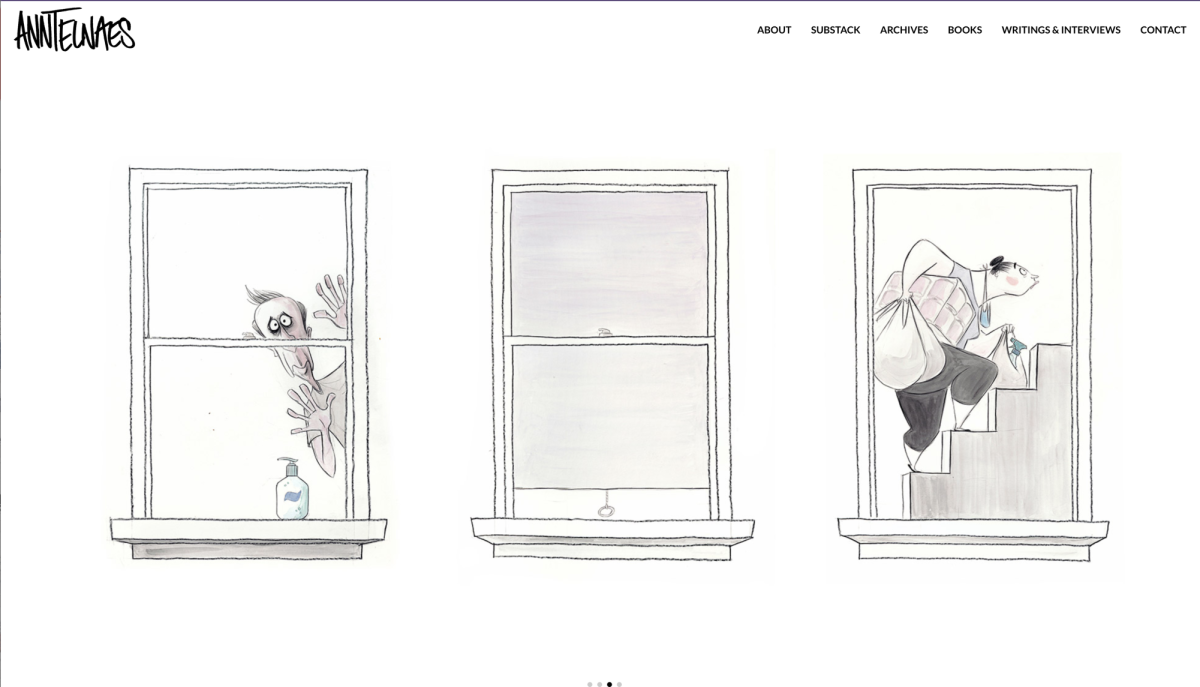
This year’s journalist is a two-time Pulitzer Prize-winning editorial cartoonist and has worked for The Washington Post, New York Times, Chicago Tribune and is the author of three books, according to the College of Communication’s website.
Telnaes spoke on her previous experiences as an editorial cartoonist, the purpose of editorial cartoons and the role they play in journalism.
Editorial cartoons are an aspect of journalism, but they serve a different purpose by providing audiences with visual depictions of things happening in the world, according to Telnaes.
“Editorial cartoonists are not reporters, but we create visual commentary,” Telnaes said. “Our images shine a spotlight on those in power and hold them accountable.”
According to Telnaes, editorial cartoons are a way to reach everyone, regardless of language or class, with something they can relate to and respond to.
“Every human, regardless of class or education, will respond to a cartoon,” Telnaes said. “They transcend language, borders and class.”
Telnaes also spoke about the end of her career as an editorial cartoonist at The Washington Post. She said it was an unexpected but quick decision to resign from The Washington Post after they rejected a cartoon of hers.
The last editorial cartoon Telnaes created depicted a temple of Donald Trump with popular figures like Jeff Bezos kneeling below him, holding offerings.
“I quit The Washington Post after 16 years,” Telnaes said. “For the first time ever, an editor prevented me from doing my job because of who I decided to aim my pen at.”
Jen Smith, assistant professor for the UK School of Journalism, attended the lecture with her Journalism 101 class, where she gave her students the opportunity to ask good questions.
According to Smith, the lecture was important for students to hear from an experienced journalist.
“The courage to speak out and say what you believe; I think those are really powerful messages for young people to hear, especially in our current environment,” Smith said.
Smith said she was glad to give her students the chance to practice research and ask questions so they can have a better understanding and experience of journalism interviewing.
“As a Journalist, your job is to make it a conversation, not a confrontation,” Smith said. “I always stress to students to put in the effort and practice to show the person you are interviewing that you care about them.”
Nicolas Buemi, a UK journalism student, came to the lecture for his class assignment where he is required to select a guest lecture to attend.
“I never really knew anything about cartoons,” Buemi said. “But when I visited my grandma in Cincinnati, I always flipped through her newspapers for cartoons.”
Buemi said the Joe Creason Lecture helped him realize the different opportunities available to him in the journalism field.
“I think lectures like the Joe Creason Lecture shows students who might not know what they are into yet different options in the journalism field,” Buemi said.